Introducing the Zero-Trip Wedge
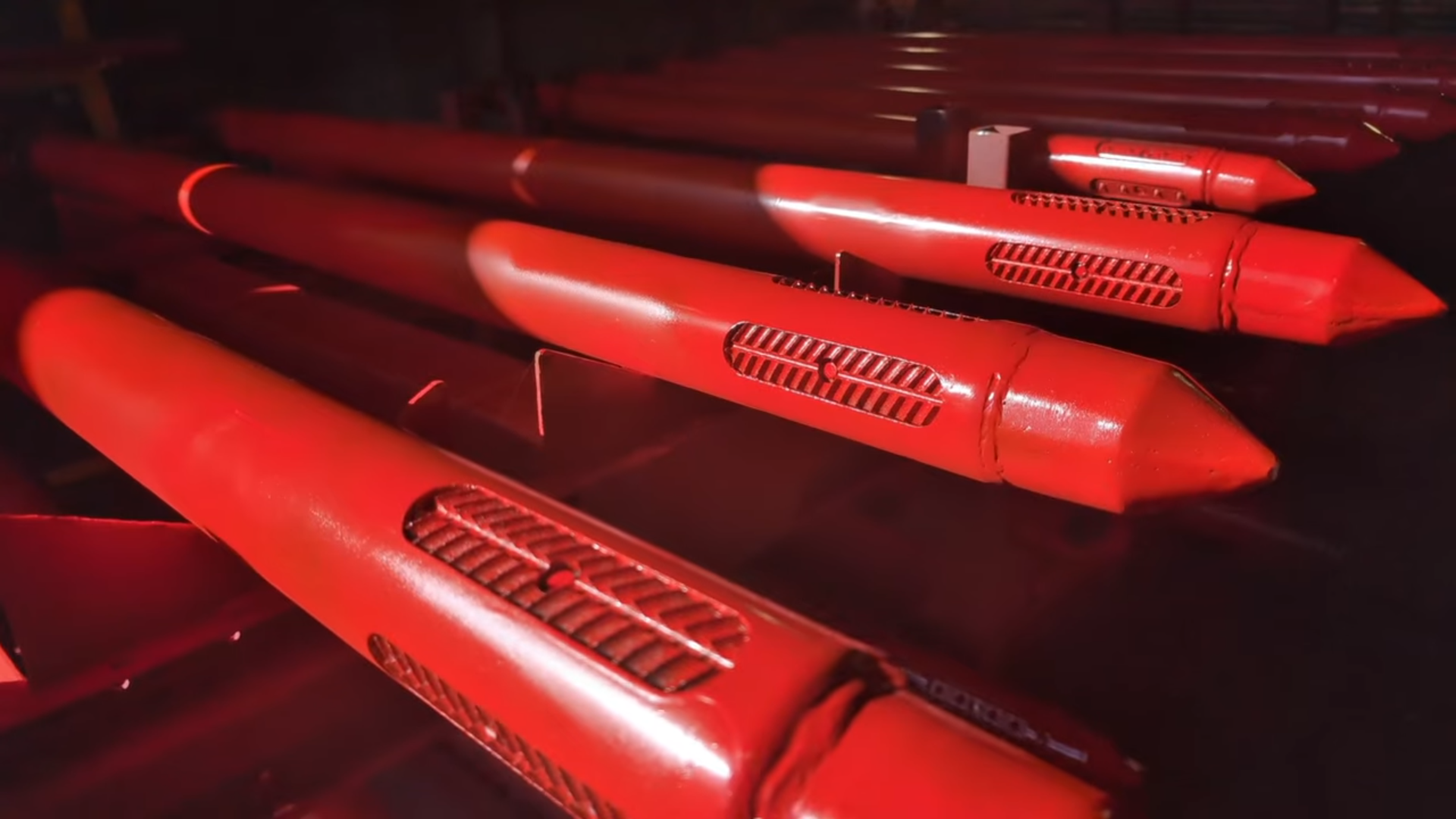
The Zero-Trip Wedging System
Developed by Zero-Trip Innovations, the Zero-Trip Wedge is a directional drilling and borehole recovery tool designed to eliminate multiple rod trips traditionally required when setting a deflector wedge.
The technology has already been used at depth across Ireland, Africa, Scandinavia and Canada, and has now been introduced to the Australasian market through Western Australian distributor D&B Supplies.
Featured in Australasian Drilling Magazine
The Zero-Trip Wedging System was recently featured in the August–September 2026 edition of Australasian Drilling, in an article titled "Six trips to one – do the maths."
The article examines time, cost and safety implications of conventional deflector wedging and how the Zero-Trip system provides a faster alternative for deep directional drilling.
Read the Full Australasian Drilling Article →"The Zero-Trip Wedging system redefines the deep hole directional coring process."
— Darryl Gamble, D&B Supplies
The Lost-Time Problem
Conventional deflector wedging is a familiar but time-consuming process for diamond drilling crews working directional holes. The lost drilling time associated with conventional rod handling can increase significantly with depth.
Conventional Wedging — Reported Lost Rig Time
- → 1,000 metres: approximately 24 hours
- → 1,500 metres: approximately 36 hours
- → 2,000 metres: approximately 48 hours
*Figures reported by Australasian Drilling, based on standard rod-handling procedures for conventional deflector wedging.
A Safer Approach to Rod Handling
Productivity is only part of the equation. Every rod trip eliminated from a drilling operation also reduces the amount of manual handling associated with setting a conventional wedge.
Rod handling represents a significant operational risk on drilling rigs, while also contributing to wear on drill-string threads, hoisting equipment and rod-clamping mechanisms.
For contractors working at depth, reducing unnecessary rod handling can therefore provide both a productivity advantage and an important safety benefit.
How the Zero-Trip System Works
The Zero-Trip Wedging System consists of three primary components: a patented anchor system, the deflector device and a drop kit. The complete assembly is prepared and aligned at the surface before being run into the borehole together.
Once at depth, the assembly is orientated and locked into position using water pressure and hydraulic pullback. The drop kit is then retrieved on the wireline, a clean inner-tube assembly is seated in the core barrel and drilling can resume directly off the wedge.
One rod trip. Hole deflected. Coring resumed.
Built for Deep-Hole Directional Drilling
The system is designed to give drilling crews greater flexibility when directional control is required. The Zero-Trip Wedge can be oriented to the required azimuth and inclination, including applications where the borehole needs to be made steeper or redirected through existing casing.
Proven at Depth
The strongest evidence of the system's capability comes from its use in demanding deep-hole drilling environments.
Priority Drilling has used Zero-Trip wedges extensively at the Tara Mines zinc operation in Ireland, with the deepest installation reported at approximately 2,980 metres. That installation enabled a borehole to be completed to approximately 3,200 metres, after the client had spent six weeks attempting to complete the hole using other methods.
"All these operations achieved 100 per cent installation success in stable ground conditions."
— Corey McCarthy, Zero-Trip Innovations
The technology has also been deployed across operations in Europe, Scandinavia, Tanzania, Mali, the Democratic Republic of Congo and Canada.